
Winter Haven Previous Residents Sources
A sound search for Winter Haven previous residents uses records made for different purposes. The current parcel card identifies the land and present owner. A deed documents a transfer, but it does not prove that each named party lived there. A directory or census may support occupancy. Permits date work on the structure, while maps help bridge old numbers and changed footprints.
| Source | Local years | Where kept | Best evidence |
|---|---|---|---|
| Official Records online | 1957 to present | Polk Clerk | Deed parties, dates, instrument and images |
| Deed books and indexes | Before 1957 | Clerk, history library, archives | Earlier title transfers |
| City directories | Documented 1923, 1925, 1928 and 1941; library list from 1941 | Winter Haven and Polk libraries | Names, addresses, spouse and work |
| Federal census | 1900 through 1950 public | NARA and genealogy databases | Households and census address |
| Sanborn maps | 1914, 1919, 1924, 1928 and 1950 | UF, Library of Congress, libraries | Building form, use and address change |
| Permit files | Through 2025 in eSuite; 2026 forward in Accela | Winter Haven Building Division | Work, inspections and status |
Choose the source nearest the date under study. Then seek a second record made at about the same time. That keeps a current assessment, a deed recording date, and an annual directory entry from being treated as one timeless fact.
Trace Winter Haven Previous Residents
The Polk County Property Appraiser is the practical start. Search the full situs address, including the NW, NE, SW, or SE suffix. Save the parcel ID, legal description, subdivision, lot and block, current owner, mailing address, and sales references. Situs means the physical location of the land. The mailing address is only where the tax notice goes.
- Confirm that the mapped parcel is the intended Winter Haven house.
- Search the current owner as grantee in Polk Official Records. A grantee receives the interest; a grantor gives it.
- Read the deed image and match its legal description to the parcel.
- Search that grantor as an earlier grantee, then repeat for each transfer.
- At the 1957 web cutoff, ask for older index books or microfilm.
- Chain of title
- The linked sequence of transfers affecting the same land.
- Legal description
- The durable lot, block, subdivision, or metes-and-bounds identity.
- Grantor and grantee
- The party transferring an interest and the party receiving it.
- Corrective deed
- An instrument that fixes an error and may not represent a sale.
A quitclaim, trust transfer, or name change can still be a useful link. Keep the document type, execution date, recording date, instrument, and book and page. Never assume every deed marks a move or purchase. Current street-wide work belongs in the Winter Haven street directory.
Previous Residents Before 1957
January 1, 1957 is an access boundary, not the year Polk began keeping deeds. Carry the last known parties, date range, and exact legal description to the clerk's public counter. Ask for the older grantor-grantee index or deed book rather than concluding that no earlier record exists.
Call 863-534-4000 for clerk help or 863-534-4401 for records and certified copies. PIER accepts tracked requests. The Polk Historical and Genealogical Library adds tax rolls, maps, aerials, newspapers, and directory evidence. A web image is a useful research copy, but it is not a certified copy.
Search tip. Alternate seller-as-grantee searches and match the legal description at each link because names and street numbers can change.
Map Winter Haven Past Residents
The documented Sanborn sequence covers 1914, 1919, 1924, 1928, and 1950. The sheets may show a building footprint, material, use, outbuildings, and its number at that time. They do not name previous residents. Their strength is proof that a structure existed, changed shape, or used a different address.
Browse the University of Florida Sanborn collection and compare its sheets with deeds and directory entries.
The captured collection route leads to digitized Florida maps. If a number disappears, use the lot and block, nearby landmarks, and deed legal description instead of assuming the house vanished.
Date Previous Residents Property Changes
Winter Haven permit research has a sharp system split. eSuite retains public history for 2025 and older. Accela handles 2026-forward applications, plan review, approved documents, and inspections. Search both for work spanning the cutoff. The parcel's year-built field is assessment data and may differ from permit chronology.
Request a permit card, eligible plans, inspection history, certificate of occupancy, or code case by exact address, parcel, and date range. The Building Division is at 490 Third Street NW, 863-291-5695. First confirm city jurisdiction. A Winter Haven postal address can sit in unincorporated Polk County.
An application alone does not prove work occurred. Compare issue, inspection, completion, and certificate dates with maps, building facts, and directory changes. The 2026 switch is a digital boundary, so a missing hit may mean the wrong portal rather than no record.
Pair Winter Haven Past Residents
Ownership is only half the answer to who lived here before. A city directory can list a resident, spouse, occupation, and exact address for one edition. Later volumes may have a street or criss-cross section, an address-first listing. Confirm it in each volume. The collection itself is covered by the Winter Haven city directory.
- Choose directory editions just before and after the target year.
- Pair 1923, 1925, and 1928 entries with the 1920 or 1930 census.
- Compare 1941 with the 1940 census and later runs with 1950.
- When a name drops out, check the obituary index, microfilm, probate docket, and next deed.
The 1950 census is the latest public federal schedule under the 72-year rule. Directory and census dates remain separate snapshots. Never claim that someone occupied a house throughout a multi-year gap based only on two endpoint volumes.
Close Winter Haven Previous Resident Trails
The Winter Haven Herald obituary index covers 1935 through 1966 and 1968 through 1977. For the 1967 gap, use the Bartow collection, probate, directories, and other newspapers. An obituary may identify relatives and explain why a past resident disappears, but its names and dates still need a second check.
The Florida vital-records hub separates the available record types and order routes.
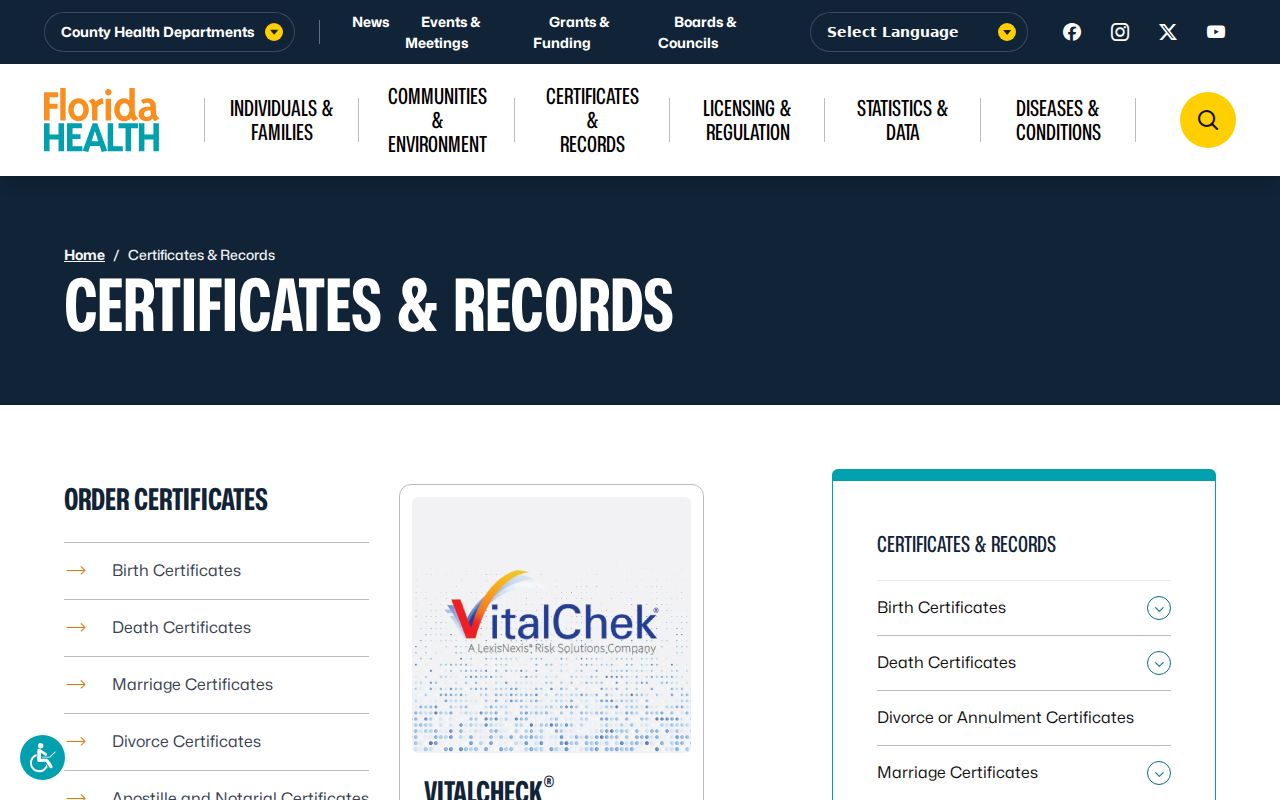
Birth, death, marriage, and dissolution records have different access rules. Cause-of-death information is restricted for 50 years, while a no-cause death copy has broader access.
Review the official birth certificate rules before seeking proof.
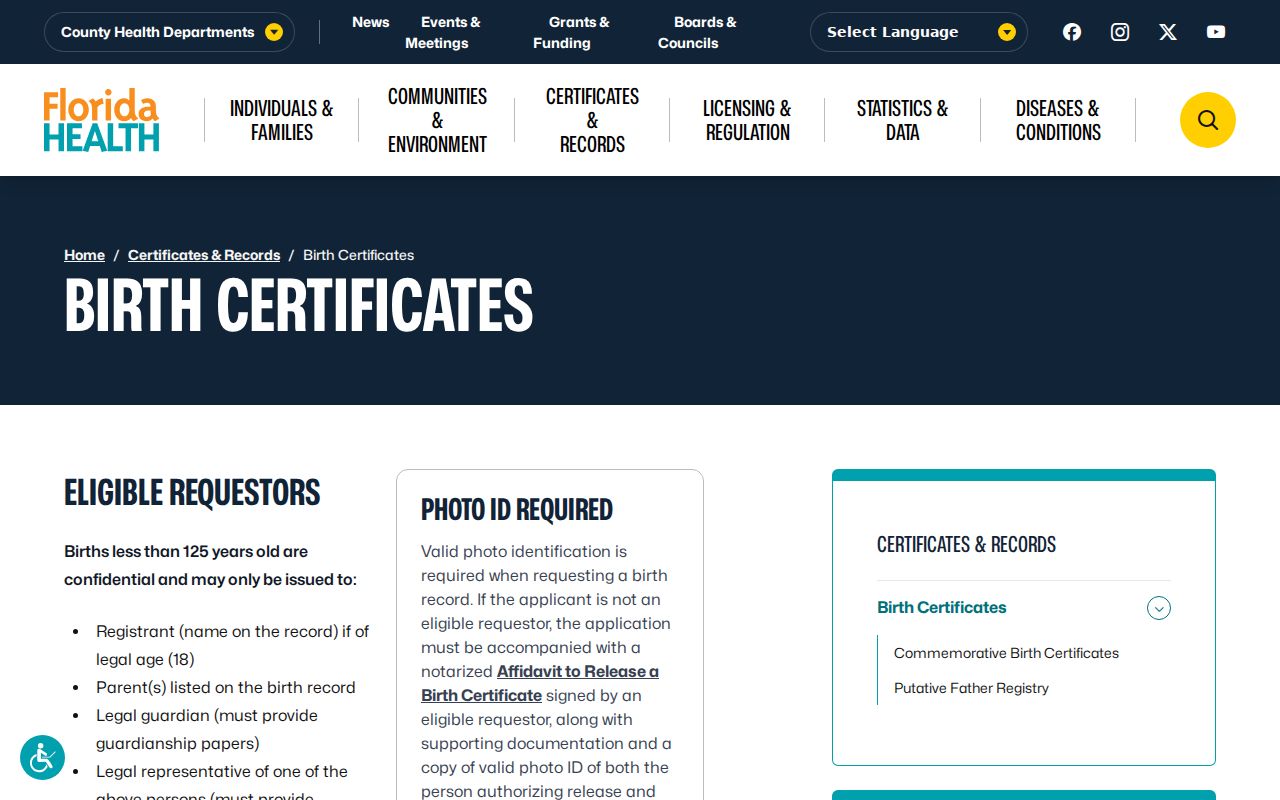
The eligibility screen shows why a house-history search cannot bypass confidential births under 125 years. Deeds, directories, census schedules, newspapers, and probate often answer the historical question without a restricted certificate.
Verify Winter Haven Past Residents
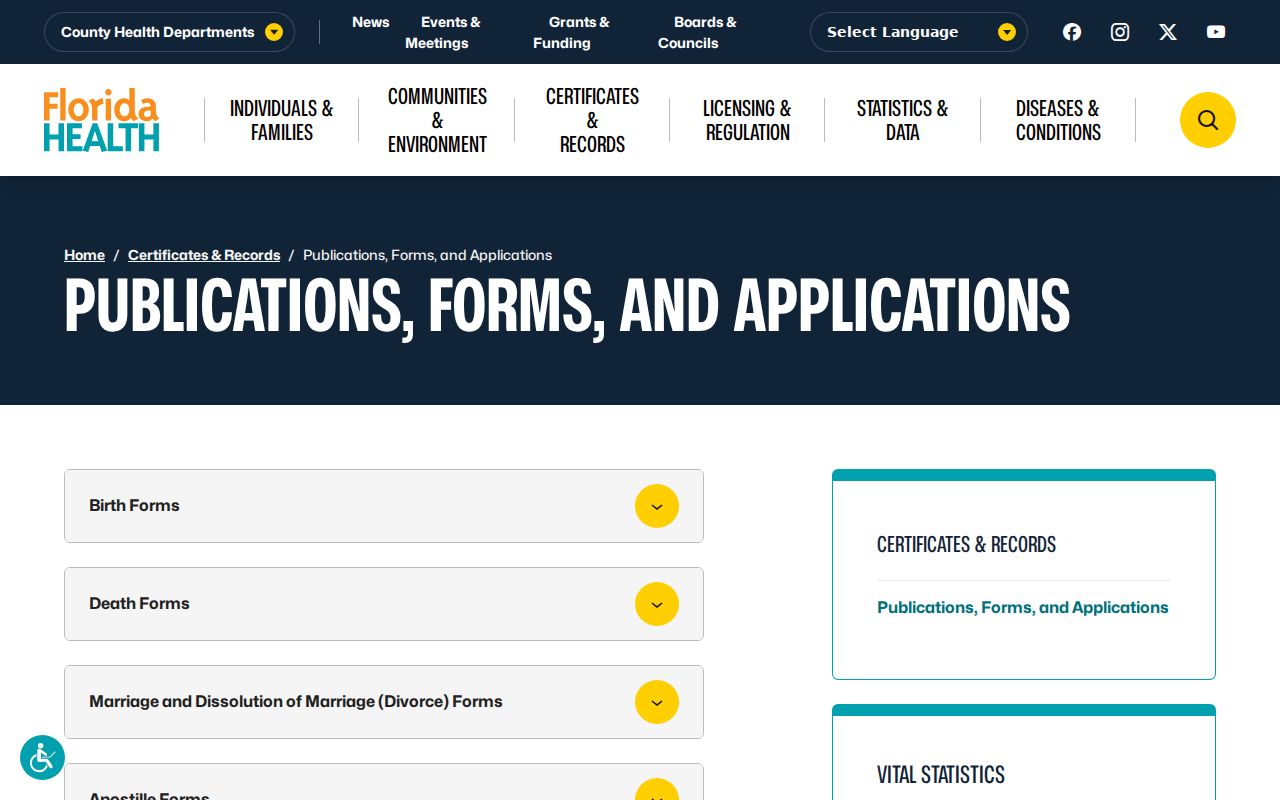
An index hit is not always the final document. Florida's vital-record forms index points eligible applicants to the right form.
Applications require event facts, applicant details, ID, relationship or authority when needed, a signature, and payment. Polk Clerk marriage licenses and dissolution case files differ from state certifications. State marriage and dissolution certifications begin June 6, 1927; earlier marriage records remain with the county clerk.
Use Previous Residents Records Lawfully
Previous residents research is most accurate when each claim states its date and source. Write “owner on the current assessment roll,” “grantee in a deed recorded on a stated date,” or “listed at the address in the named directory.” Do not reduce all three to “lived there” without matching occupancy evidence.
Protected addresses, sealed files, utility accounts, DMV data, minors, and private household details do not form an open house roster. Florida Safe at Home and other exemptions can hide addresses. An absent hit may also signal the wrong system, year, spelling, or jurisdiction.
Lawful use. Trace Winter Haven past residents for house history, genealogy, heirs, or personal curiosity. Never use an address trail to stalk, harass, or harm anyone.